What is local SEO ?
What is the importance of Local SEO ranking factors?
How does it helps businesses to stand out in the local area?
Local SEO, also known as local search engine optimization, is the process of optimizing a businesses website and online presence to rank higher in local search results. Google Business Profile (GBP), your website, and other online directories are optimized for gaining maximum customers in “near me “ local search results.
All SEO aims to increase a business visibility to a targeted audience, but local SEO takes targeting even further. Local SEO focuses on customers and prospects in a specific area and drives traffic to websites and physical establishments. Gaining an edge against your local competitors is made possible through local SEO.
Restaurants, retail stores, car dealerships, law firms, and even dental clinics can benefit from local SEO.
 Time killer · Pain
Spending 6 hours writing posts that get zero traction?
Paste your URL. ZuAI turns it into 30 brand-on captions in 10 minutes — no blank-page panic, no generic AI filler.
Why Local SEO Ranking Factors are Important for Businesses
Understanding the definition of local SEO is not enough. You must know how Google ranks your business in your locality and what truly brings this visibility in search engines. Local SEO ranking factors play the crucial part in showing your business in the top search results.
So, what is this local SEO and How it affects your business?
Every business aims to be seen in Google search results. But what makes their name appear in the search results? It is obviously local SEO.
For example, If someone searches for a “restaurant near me” in Google, the search results share all the restaurants within 0.6 to 3 miles (1 to 5 kilometers). For highly populate areas, the hyper-local radius becomes small with an average of 0.6 miles and for less-populated areas, the radius is dynamic.
While most restaurants dream of being the first choice for most people, you need to stand out from the crowd. To make this happen, you need Local SEO services. Your business must appear at the right time, in the right place, and in front of the audience.
User queries are answered by Google, after analyzing these local factors.
Google primarily looks at these three key elements.
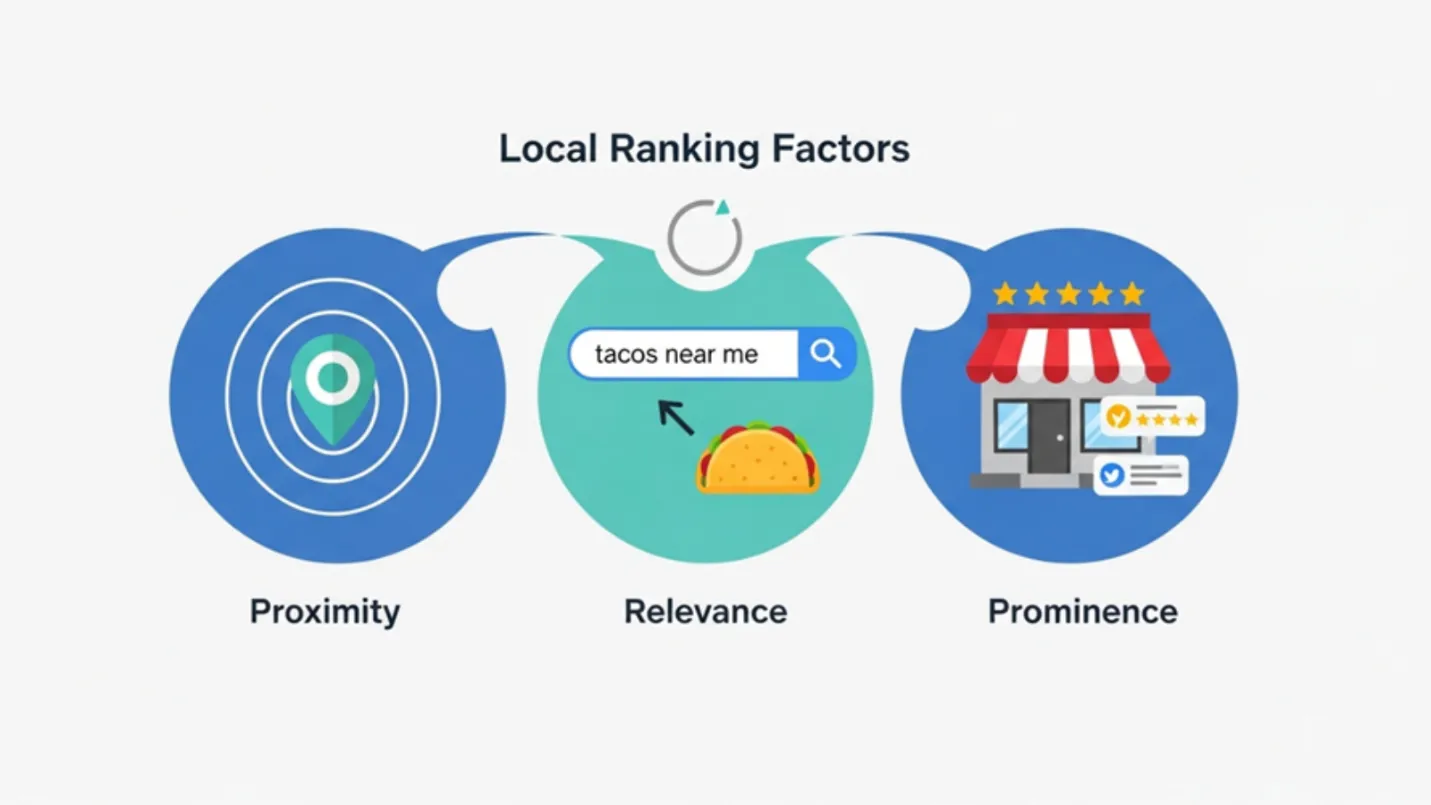
Proximity, Relevance, and Prominence.
Proximity: Proximity refers of to the distance of the business to the user’s location aor the location specified in the search query.
Case Study 1: The Closest Shop Wins
Sia was searching for a “mobile shop near me” in her laptop.
She found two shops appear on Google. One shop has 4/5 rating but it was 5 kilometers away. Whereas other shop had 4.1 rating and was just 600 meters away from her home.
Without thinking much, Sia choose the nearby shop.
Result: When customers need something immediately, closest shop wins.
Relevance: Relevance refers to how well a business listing matches the user’s search query. It is determined by factors like business category, keywords, and website content.
Case study 2: The Right Match Wins
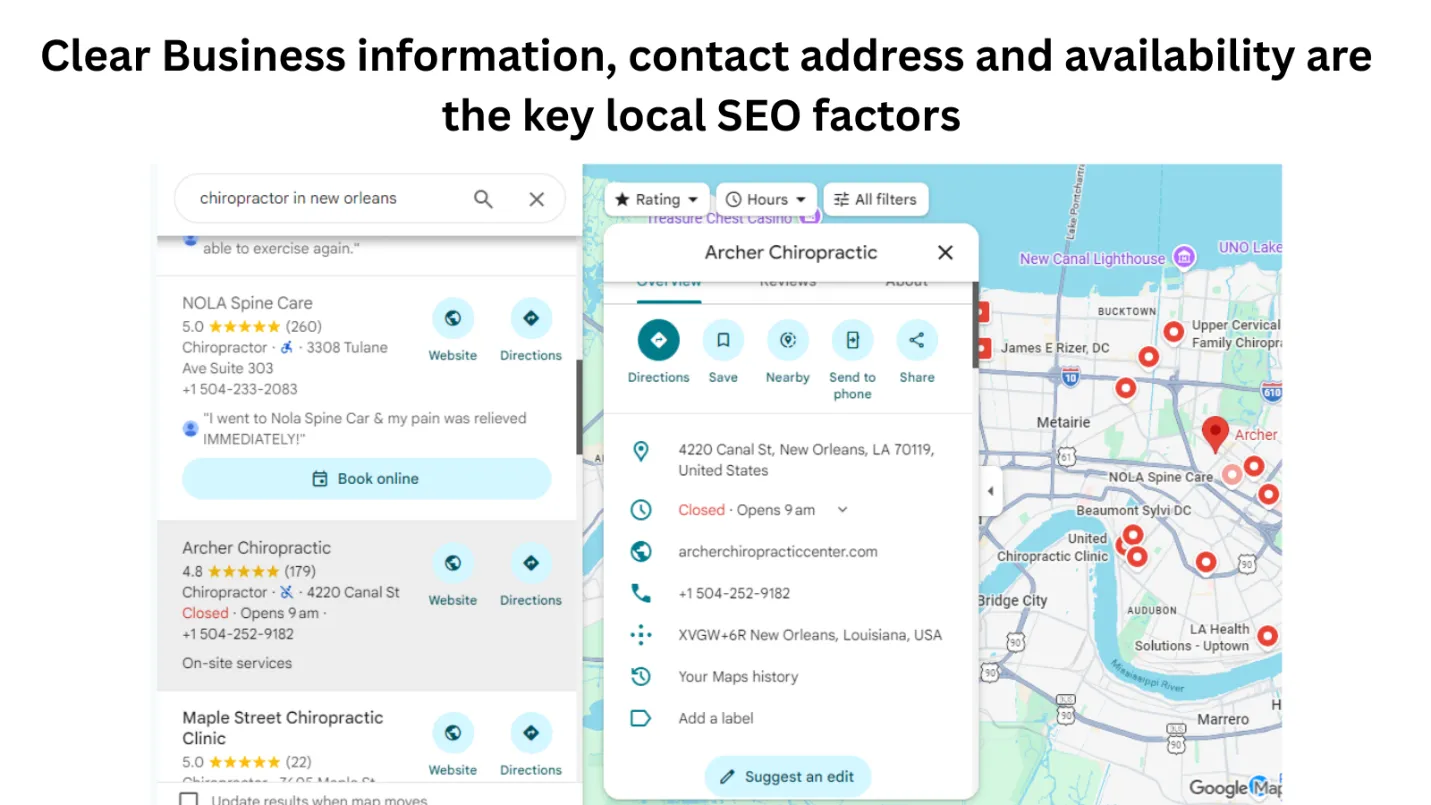
Tina searched for “ chiropractor in new orleans” and came across three chiropractor clinics. The first one mentioned chiropractor under the business category and the second and third locations had the word chiropractor in their address.
So, whom do you think Tina choose?
Of Course, the second one – Archer Chiropractic.
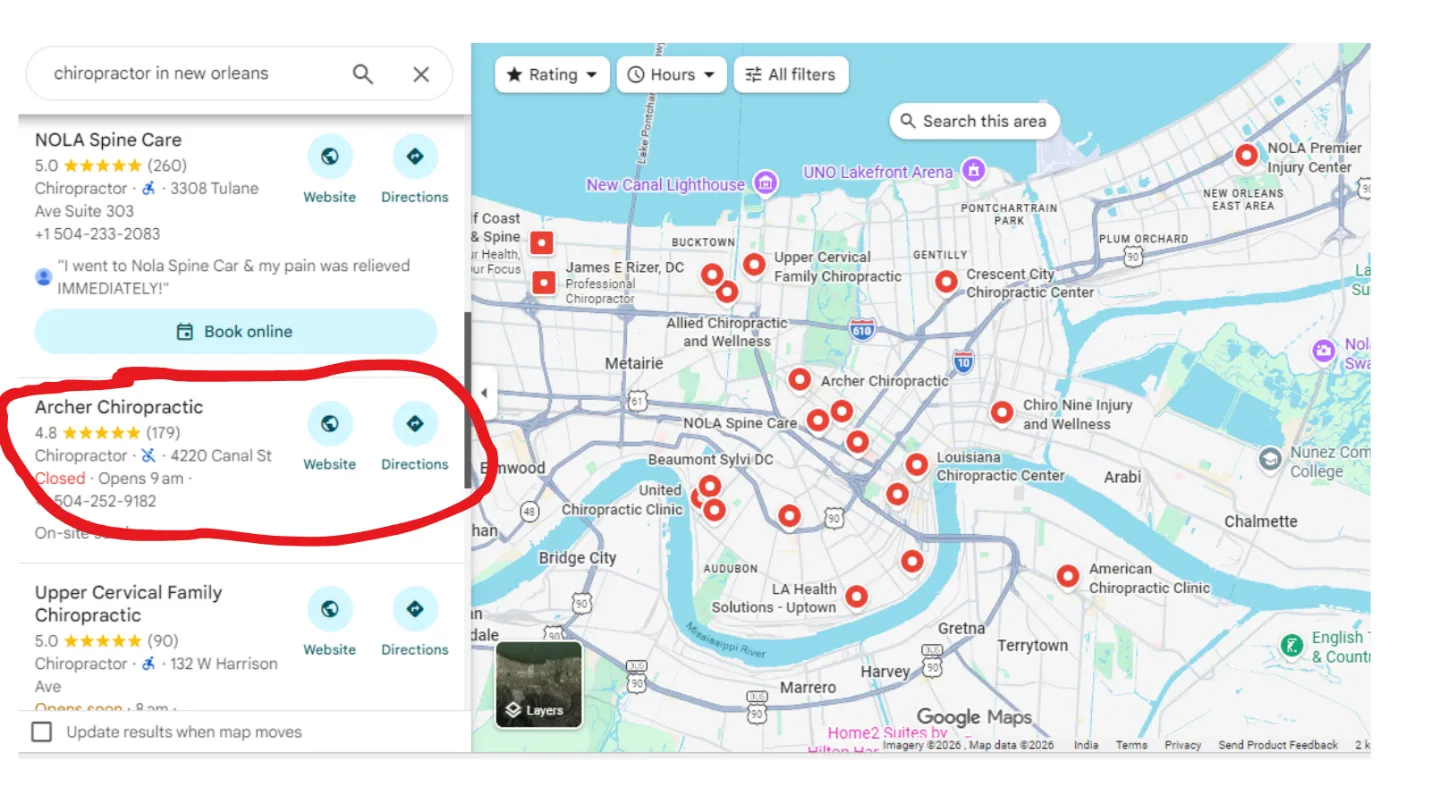
Result: It is not about popularity. Local Map packs showing relevant words to the user need wins.
Prominence: Prominence refers to the popularity, visibility, and credibility of a business online. Google considers reviews, backlinks and directory listing for the prominence.
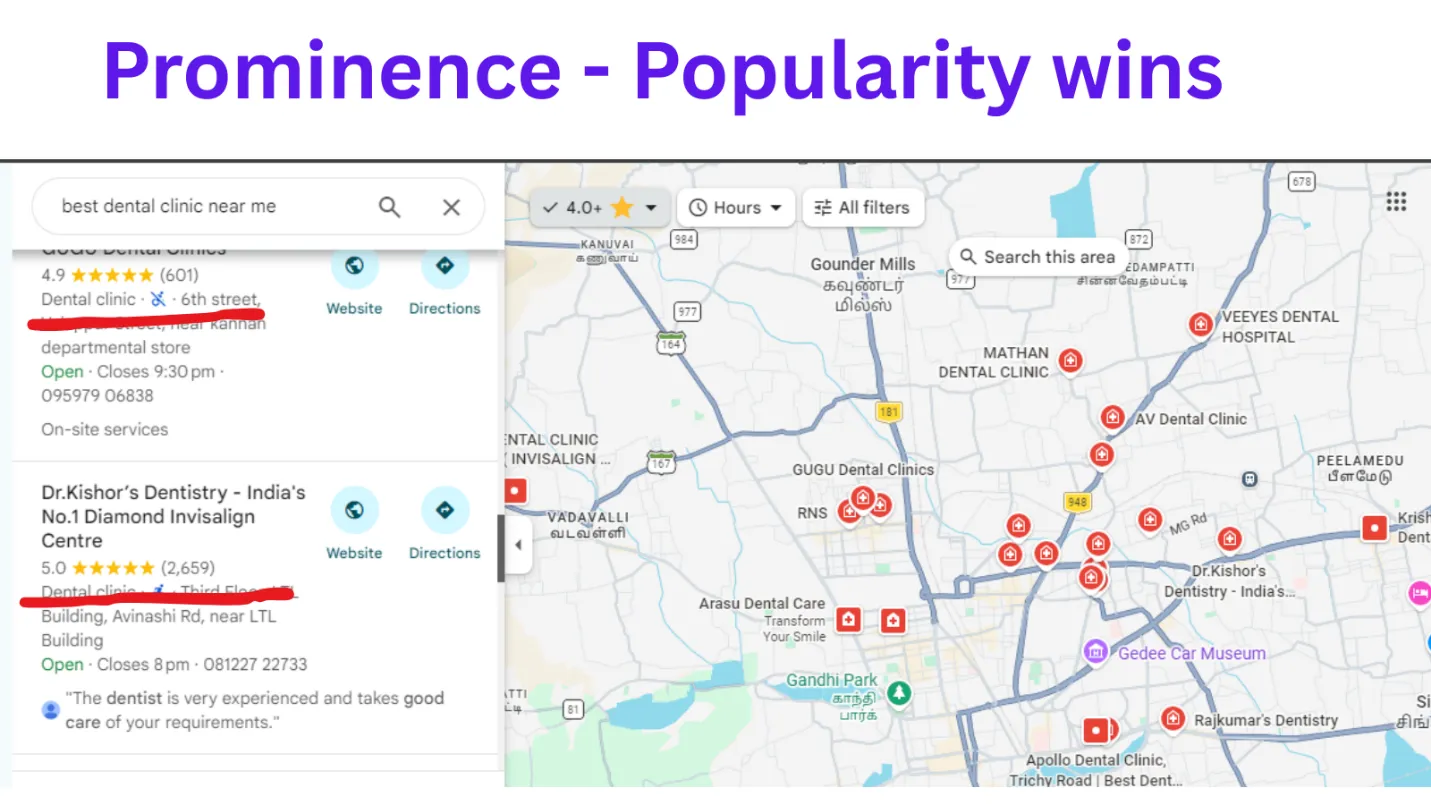
Case Study : Popularity Wins
Ria needed a dental checkup and searched for “best dental clinic near me”. She came across many clinics. But she choose the clinic with maximum reviews for dental checkup though it was very far from her location.
Result: When it comes for the best services, popularity wins.
To optimize any business for local SEO, you need to focus on these three factors and make sure your business listing is relevant to your target audience, and easily accessible to local customers and be prominent in your local market.
Outcome · RecommendedGet 30 days of social content from your website — in 10 minutes.
The Key Factors of Local SEO
Local SEO uses the same elements as traditional SEO does, but it requires a few specifically targeted elements as well.
Contact Information and Business Hours
This is the information search engines, listings or directories, and customers often look for when they first visit local business websites. A business’ operating hours and contact information, which includes its physical address and phone number, should be displayed on every page of its website.
Hyper local Keywords
Keywords and phrases containing the business location should appear in title tabs, meta descriptions, and content. Simply targeting a city or state may not be enough to drive local leads. Going hyper local by targeting even more specific communities within your city can help get more customers through your doors.
Analyze where local website traffic is coming from and use that data to choose better geo- targeted keywords.
Targeting local markets with content
Content marketing for local campaigns requires the same amount of creativity and quality for any other SEO campaign, but there needs to be a stronger emphasis on calls to action, influence marketing, and topics relevant to the business location.
- Featuring local topics
Create content based on what’s relevant to your business and your location. Write about local trends or area-specific laws related to your industry. In this way, you can establish your authority as an information resource in your locality.
- Become Brand Advocate
Don’t just sell or announce your product and services. Encourage your customers to become your brand advocates. Customers, who love your brand can promote them through word-of-mouth or by sharing content on social media.
- Establish Business Identity
Use schema markup to make sure the website contains local content that can be identified by search engines.
- Local Business Information (Phone, Address, Business Name, Operating Hours).
- Map Schema.
- Product Information.
- Images and Logo schemas.
Building Quality Citations
Quality backlinks are an important aspect of any SEO campaign, but citations are even more important for local SEO and international SEO services. Citations are brand mentions made by customers or other businesses on third-party websites. These brand mentions are key ranking factors in local search.
Some of the most important and effective types of citations
- Social or Blog Content
Encouraging brand advocates and local influencers to talk about you in their blogs and social media accounts is a good wat to acquire citations.
- Business Listings and Reviews
Listings in business directories, local networks, and review sites in themselves are citations. Managing these listings and getting more customers to post positive reviews of your business cab add more citations.
- Guest posts and Magazine Publications
You can establish your brand authority in your niche and increase the loyalty by asking your customers and influencers to write about you in an online magazine. You can also publish your own articles and press releases.
Managing Customer Reviews
Your local listings and social accounts need to have unique content that goes beyond your business description, operating hours, and contact details. The best way to ger this type of content is through customer reviews.
Integrate links to your social media pages and business listings , publish press releases for new product launches, and encourage your customers to leave an online review about your products and services. Positive reviews from customers always brings more sales to the brand.
What does indzu use?
We use
- News Placement/ Magazines,
- Blog Post Outreach,
- Press Release,
- Videos,
- Social media posts.
- Local Business Groups.
To build a strong local presence, optimizing your website alone is not enough. Brands and businesses must consider optimizing Google Business Profile. It increases visibility in local search results.
Let’s now look at how you can optimize your Google Business Profile to improve your rankings in the Google Map Pack.
Proof · Verified
2k+ grew faster with one tool.
Google Business Profile Optimization for Local Rankings
Google Business Listings are not something you want to cut corners on. 46% of Google searches are people looking for local businesses, and more than 50% of those local searchers click on what is called the Google Map Pack. That’s the first map section that shows up on Google.
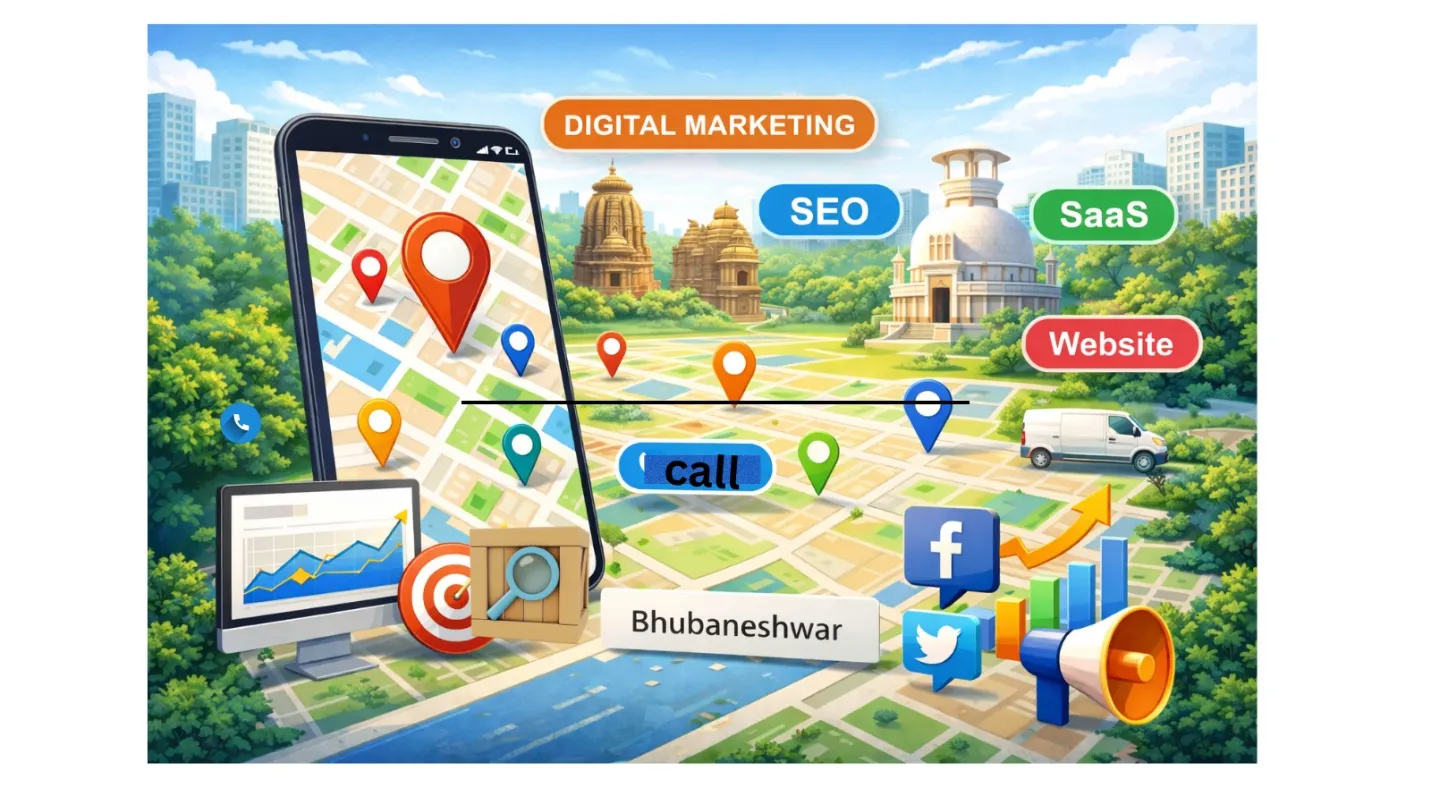
This means that most people searching for your business aren’t clicking on Google Ads or the standard Google website listings. They’re going directly to the map section and clicking on a business.
So, let’s look at the key steps to optimize your Google Business Profile.
1. Choose the Right Business Category
Google Business lets you choose a primary business category for your business. This primary category is critical and is one of the main ranking factors Google uses to see if you’re relevant in a specific search.
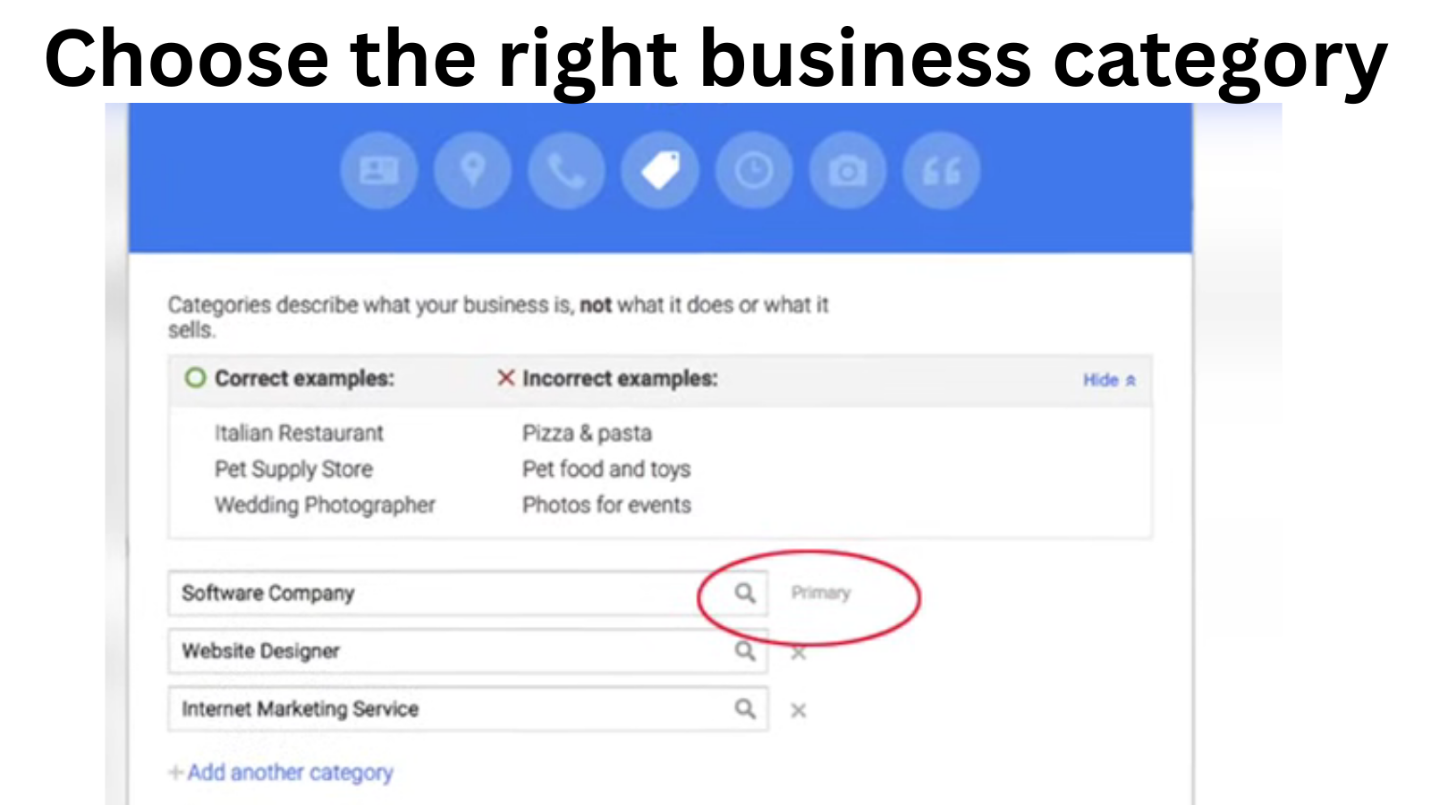
Now, this may seem straightforward, but many people may have chosen a less-than-optimal primary category. There are often multiple options that explain your service, but which one will help you rank better?
Look at the businesses ranking at the top of the search results for the keywords that you want to show up for and see what their primary category is. Choose the same category that the top-ranking businesses are using.
2. Optimize Your Business Name
The name of your business can actually help you rank better for your specific service. You want to include the main keyword people are searching for in your business name whenever possible.
Just remember Google’s policy is that it must be your real business name. Adding your service keyword to your business name shows Google that you are more relevant to that exact term and will help you rank better.
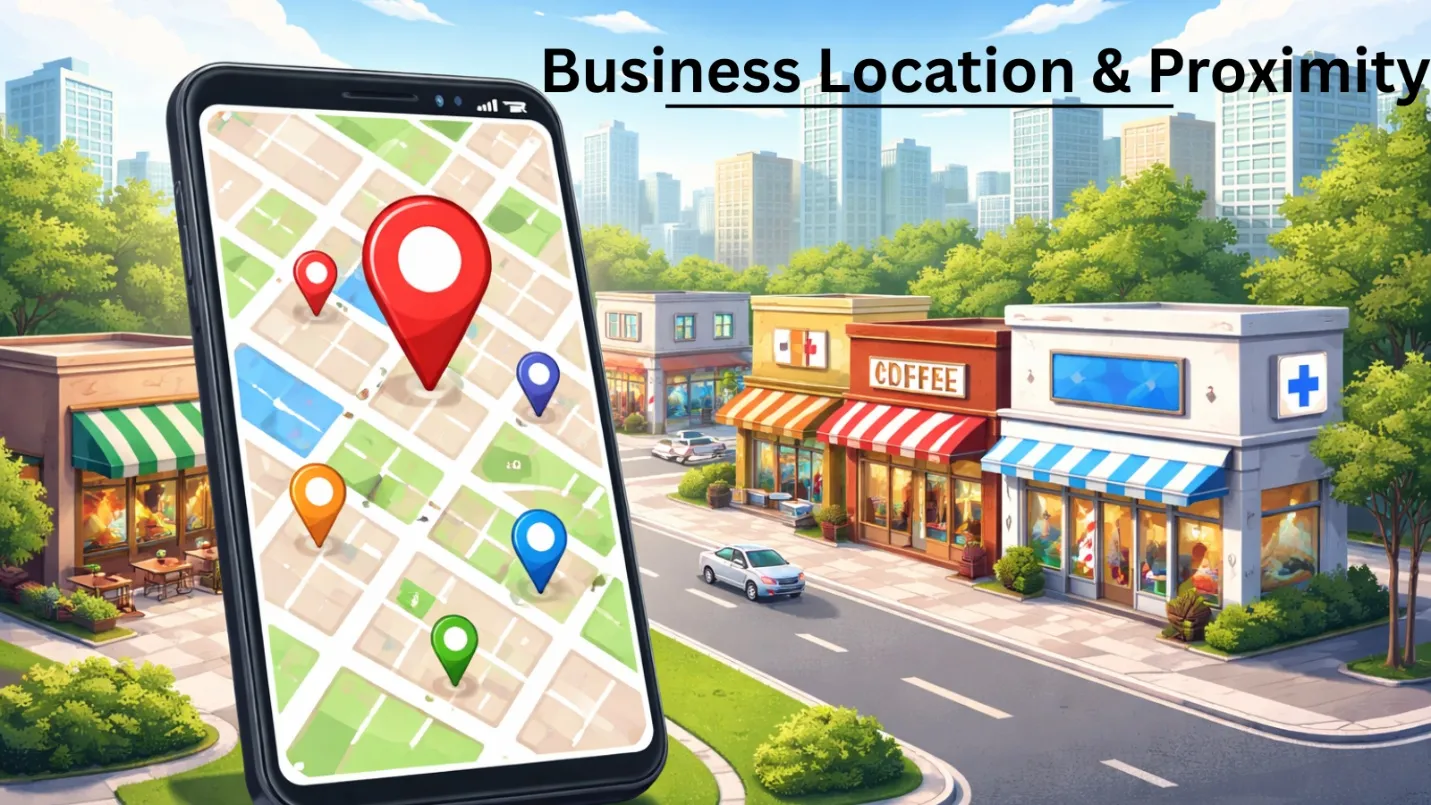
3. Business Location and Proximity
Google often presents businesses based on location. The businesses that show up to a searcher are usually in close proximity to them.
Google does not generally show businesses outside of the target city unless there are very few results. So, if your business location is not inside the city limits of the city you’re targeting, you should try to get there.
Google says you can use a working or office location as your business location as long as the location is staffed during business hours.
4. Create a Keyword-Rich Business Description and Choose the Right Services
Your business description in Google Business is your chance to show Google what you’re all about. Craft a keyword-rich description that tells potential customers and Google who you are, what you do and where you operate.
Be sure to include the services you offer and the names of major cities or areas that you provide your service. Google is scraping your listing to get any information about who you are, what you do and where you do it.
Make sure you fill out your whole listing, including the services and products that you offer. Select the services that best fit your business and stick to the main few services so Google gets a clear picture of what you do.
5. Add High-Quality Photos and Videos
Images can help in a lot of ways. They help customers see that you’re a real business and understand your work. They also show Google that you’re an active business.
When uploading your images or videos, you can tag them with a specific location in your service area. This helps Google understand where your business operates and where the images were taken.
6. Encourage and Respond to Reviews
Reviews are a powerful ranking factor. The more four or five star reviews you have, the more established and trusted Google sees you, and the higher you will move in rankings.
If you are not asking for reviews, start doing it. Asking customers to leave a review can significantly increase the number of reviews you get.
Don’t forget to respond to both positive and negative feedback. It shows that you care and that your business is active and engaged.
7. Optimize the Landing Page You Link To
Link to a page on your website that is relevant to the specific service and area that you are listing on your Google Business page.
This page should have relevant keywords in the title and in the H1 and H2 tags. Make sure that the business name, address and phone number is included on that page and is consistent across the rest of the web.
Also embed a Google Map on this page. This can enhance your local SEO and increase your chances of appearing in local map searches.
8. Build Local Backlinks
Whenever possible, get backlinks to your website from other local businesses or news outlets in your area.
If you work with another business or participate in an event, ask them to add a link to your website. This helps Google see your relevance in the local market and increases your authority.
You can also link out to those businesses on your website so Google can see that you are affiliated with other businesses and active in your community.
Free · Instant · No signupSee what ZuAI generates from your website — right now.
Paste your URL. Watch ZuAI write a month of brand-on captions in seconds. Preview before you create an account.
Local SEO for Better Visibility
Local SEO connects businesses with the right audience at the right time. Making your business appear for “near me” queries for a larger radius is the success. Indzu strongly hopes to help your business rank well in GBP and website. Contact us for our SEO services.