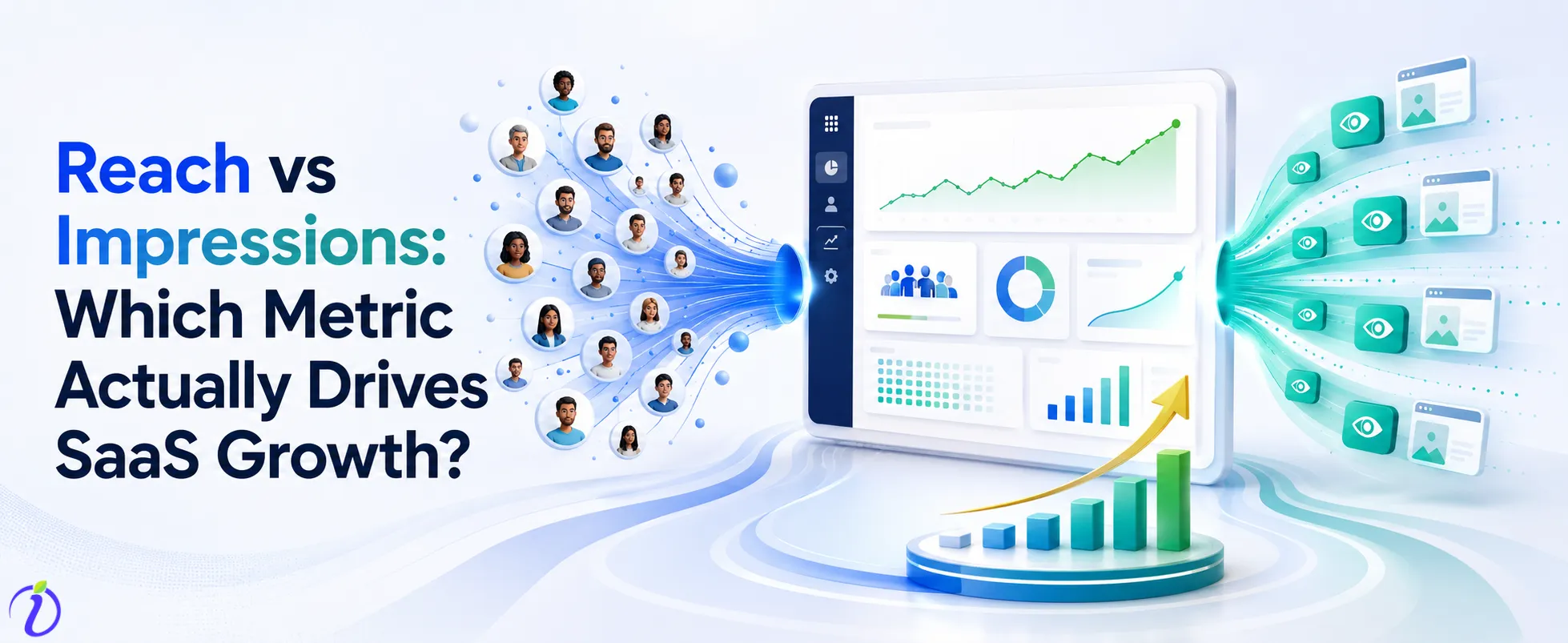
The dashboard is often a noisy place in the very competitive world of SaaS. Marketers spend hours worrying about useless metrics, looking at platform insights that promise growth but don’t actually bring in money. People in the industry have been taught to see social media performance as a popularity contest, but for a B2B product with a high-stakes sales cycle, popularity is not a good indicator of profitability. It’s time to look past the surface and check the metrics that really matter: Reach vs Impressions.
 Time killer · Pain
Spending 6 hours writing posts that get zero traction?
Paste your URL. ZuAI turns it into 30 brand-on captions in 10 minutes — no blank-page panic, no generic AI filler.
Why SaaS marketers are following the wrong North Star
Reach vs Impressions for social media, which one should a SaaS company follow?
The Vanity Metric Trap: Why Having a Lot of Reach Doesn’t Mean You Have a Lot of ARR
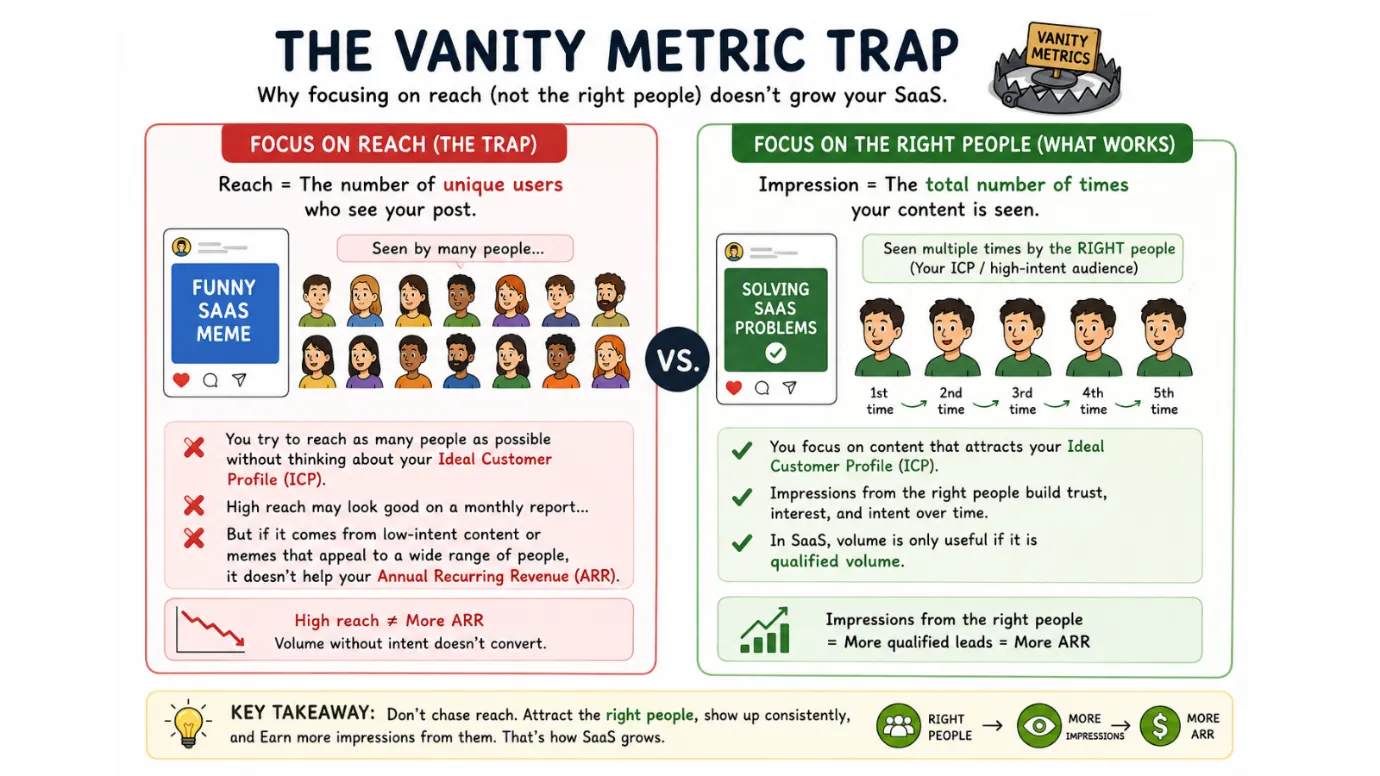
The “vanity metric trap” is the main reason why a lot of SaaS marketing campaigns don’t grow. When marketers focus on reach, which is the number of unique users who see a post, they often try to get as many people as possible to see it without thinking about whether those people fit their Ideal Customer Profile (ICP). High reach may look good on a monthly report, but if it comes from low-intent content or memes that appeal to a wide range of people, it doesn’t help your Annual Recurring Revenue (ARR). In SaaS, volume is only useful if it is qualified volume.
 Changing the Story: From Definitions of Platforms to Attribution of Revenue
 Changing the Story: From Definitions of Platforms to Attribution of Revenue
To go from reach to revenue, we need to change the way we think about what makes marketing successful. Smart SaaS marketers shouldn’t just see Facebook and LinkedIn as ways to broadcast information; they should also see them as top-of-funnel acquisition channels linked to attribution models. When you connect platform metrics with CRM data, the story changes. You don’t care who saw your ad anymore; you care who interacted with it, who went to your pricing page, and which group of viewers eventually signed up for a trial.
Outcome · RecommendedGet 30 days of social content from your website — in 10 minutes.
How to Define the Metrics in a SaaS Way
Reach: How to Measure Total Addressable Market (TAM)?
In a business-to-business (B2B) setting, reach is a way to measure how big your brand is within your total addressable market (TAM). It shares how many people in your target market are aware of your product. If your reach isn’t growing, your market penetration is probably leveling off. But this number is only useful when you break it down by job titles, industries, and company sizes that match your actual user base.
Impressions: Calculating Brand Salience and Educational Frequency
Impressions are the total number of times your content is shown on a screen, no matter how many times a single user sees it. For complicated SaaS products that need a lot of user education, impressions may be more important than reach. High-frequency impressions keep your brand at the top of people’s minds during a long, thoughtful sales cycle, which builds the trust you need before a lead even visits your website.
Proof · Verified
2k+ grew faster with one tool.
The SaaS Growth Matrix: When Each Metric Is Most Important
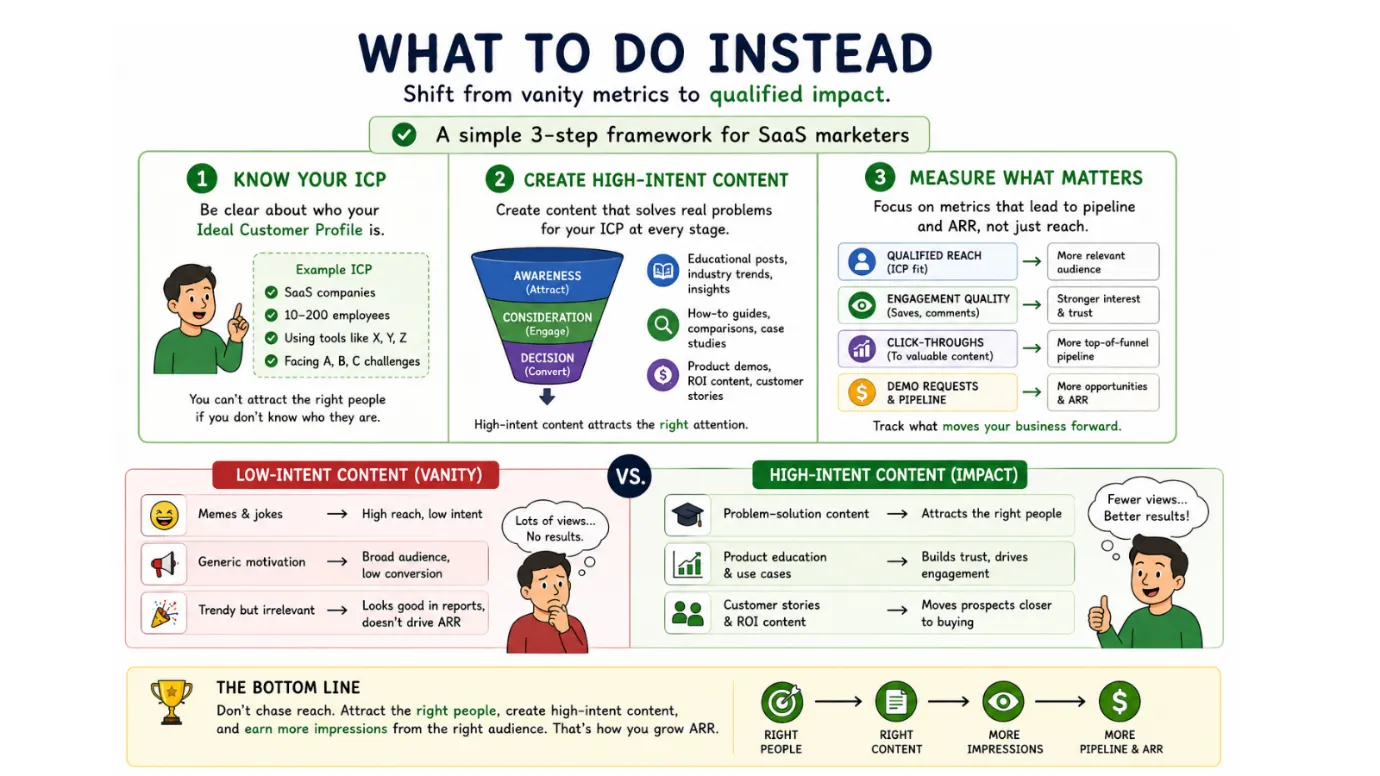
The “SaaS Growth Matrix” identifies the lifecycle stages that are important in these metrics. Reach is the most important thing in the awareness phase. To get new leads, you need to widen the top of the funnel. However, during the consideration and decision phases, high-frequency impressions drive conversion. You can improve both discovery and depth by linking these metrics to the user journey. Reach vs Impressions is not a tough nut to crack though.
Free · Instant · No signupSee what ZuAI generates from your website — right now.
Paste your URL. Watch ZuAI write a month of brand-on captions in seconds. Preview before you create an account.
Reach: The Key to Market Growth
Scaling the Top of the Funnel: How to Use Organic Reach to Find New Brands
Organic reach is still a strong and cost-effective way for more reach. SaaS marketers can make their brand look like an expert on platforms like LinkedIn by using thought-leadership content instead of spending a lot of money on ads. This top-of-funnel reach works like a filter: if your content is specific, it will naturally draw in the right people and keep out the wrong ones.
Why Reach is Important for Creating Categories?
Reach is the only way for a company to become the market leader when it is the first to create a new software category.
Not only are you trying to get people’s attention, but you’re also teaching the market that there is a problem and that your solution is the best one.
To make sure that your brand is the first one that comes to mind when prospects think about the problems you solve, do broad reach initiatives.
How to Deal with Algorithm Changes and Social Media Platforms
Every social media platform imposes a “tax on reach” through their algorithm changes. A post’s half-life on Instagram or Twitter/X is usually measured in minutes or hours. To sustain reach, marketers must constantly upload high-value content. It’s risky to rely only on organic reach. Good SaaS strategies add paid reach to this to make sure that their message is always seen by the right people.
Speed · 10-minute setupOne coffee from URL to a full month of scheduled posts.
Drop your URL, brew your coffee, come back to 30 brand-on captions ready to publish.
Impressions: The Key to Turning B2B Leads into Customers
The Complexity Hurdle: Why SaaS Products Need a Lot of Impressions
A SaaS tool often needs more than one touchpoint to show its worth, unlike a simple retail product. Before signing up, prospects need to know about the ROI, how easy it is to integrate, and the security features. The best way to get over this problem is to make sure that a prospect sees your content repeatedly. This transforms your vague brand impression into a clear value proposition.
Building Trust through Retargeting
Retargeting campaigns use impressions to keep prospects interested. If someone goes to your site and then leaves, they are not “lost”; they are just thinking about it. You keep their attention, build trust, and eventually get them to try a product by showing them specific educational content or case studies through high-frequency retargeting.
Brand Recall vs. Ad Fatigue: How to Find the Right Frequency
There is a thin line between marketing that keeps going and ad fatigue. When a user sees your brand too many times, it stops being a solution and starts being an annoyance. Marketers need to keep a close eye on their analytics. If the click-through rate (CTR) starts to drop a lot, it’s a clear sign that the content has reached its saturation point and needs a creative refresh.
Blank tab. Six open browsers. No clue what to post.

 After · With Indzu
Paste one URL. Get 30 scheduled posts.
Analyzing Ad Frequency and Number of Units Solid is the Math of Growth
Calculate the Frequency Ceiling
Every campaign has a frequency ceiling, which is the point where impressions cost more than the value they bring in. If your Customer Acquisition Cost (CAC) goes up as your impression frequency goes up, you’re basically paying for extra ads. To find this ceiling, you need to closely watch your Meta Business Suite or LinkedIn campaign manager data to make sure that your spending is optimized for efficiency, not just display count.
The Relationship Between Impressions, Click-Through Rate (CTR), and Return on Advertising Spend (ROAS)
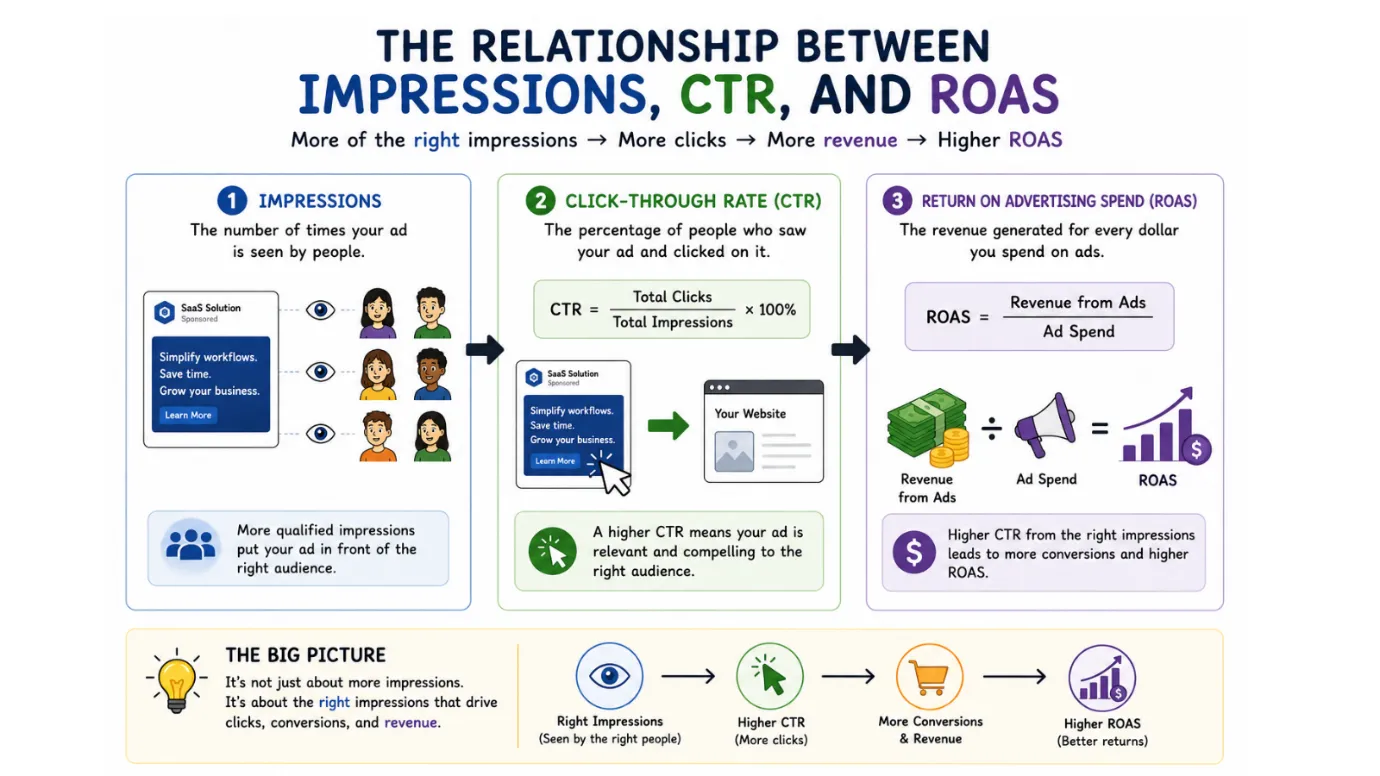
The way these variables are related defines your growth rate. If the CTR is close to zero, high impressions are useless. Your goal is to get the most impressions from a highly relevant audience so that you can keep a high CTR, which will boost your Return on Ad Spend (ROAS). If a lot of people see your content but don’t click on it, that means it isn’t connecting with the right people. Do the math with reach vs impressions.
Identifying Content Fatigue
Your analytics dashboards make it easy to see when you’re getting tired. If your engagement rate is low or not changing and your impression count is high, it means your audience is bored. SaaS marketers need to think of content as a seasonal item that has a limited shelf life. To keep your conversion intent high, you need to regularly update your creatives based on performance data.
Time killer · Pain
Spending 6 hours writing posts that get zero traction?
Paste your URL. ZuAI turns it into 30 brand-on captions in 10 minutes — no blank-page panic, no generic AI filler.
Strategic Use: Connecting Metrics to the SaaS Customer Journey
The Awareness Phase
Prioritize paid reach at the top of the funnel. Use targeting tools that are specific to each platform to send your target audience broad messages. The goal here is not to convert right away, but to get people to know about your brand and build a custom audience that you can later nurture with lower-funnel tactics.
The Consideration Phase
Once a user has interacted with your content, focus on high-frequency impressions. Give this group case studies, testimonials, and detailed descriptions of how each feature works. The goal is to get the lead to trust you. This is where social proof becomes your most valuable tool. When the prospect sees the same successful outcome over and over again, they will believe that your product is a safe, proven choice.
The Conversion Phase
During the conversion phase, accuracy is very important. Use granular targeting to get in touch with the people who are most likely to buy from you. At the same time, use strict impression capping to make sure you don’t waste money on users who have already converted or who have clearly shown they aren’t interested.
Outcome · RecommendedGet 30 days of social content from your website — in 10 minutes.
Combining Social Metrics with CRM and Analytics
What Google Analytics and UTM Tracking Do
Native tools on a platform are biased because they want you to think their effect is bigger than it really is. If you want an accurate picture of performance, you need to use UTM tracking to send social traffic straight to Google Analytics. This makes it easier to see the “last touch” attribution and figure out which social campaigns really got people to sign up for demos or requests.
Does a Social Campaign with a Lot of Impressions Lead to Branded Search?
Often, a high-impression social media campaign doesn’t lead to a direct click, but it does lead to a “branded search” later.
People see your ad, get interested, and then look up your business name on Google. You must acknowledge this link for accurate ROI analysis. You probably won’t realize how well your social strategy is working if you don’t link impressions to search volume.
Using ZU AI for Holistic growth Reporting
Platforms like ZU AI, and Hootsuite let you combine data from different channels so you can get a complete picture of how people feel about your brand and how it’s growing. Not only can you use these tools to make plans, but you can also use them to compare reports.
Proof · Verified
2k+ grew faster with one tool.
Scaling Your SaaS Strategy for 2026 and Beyond
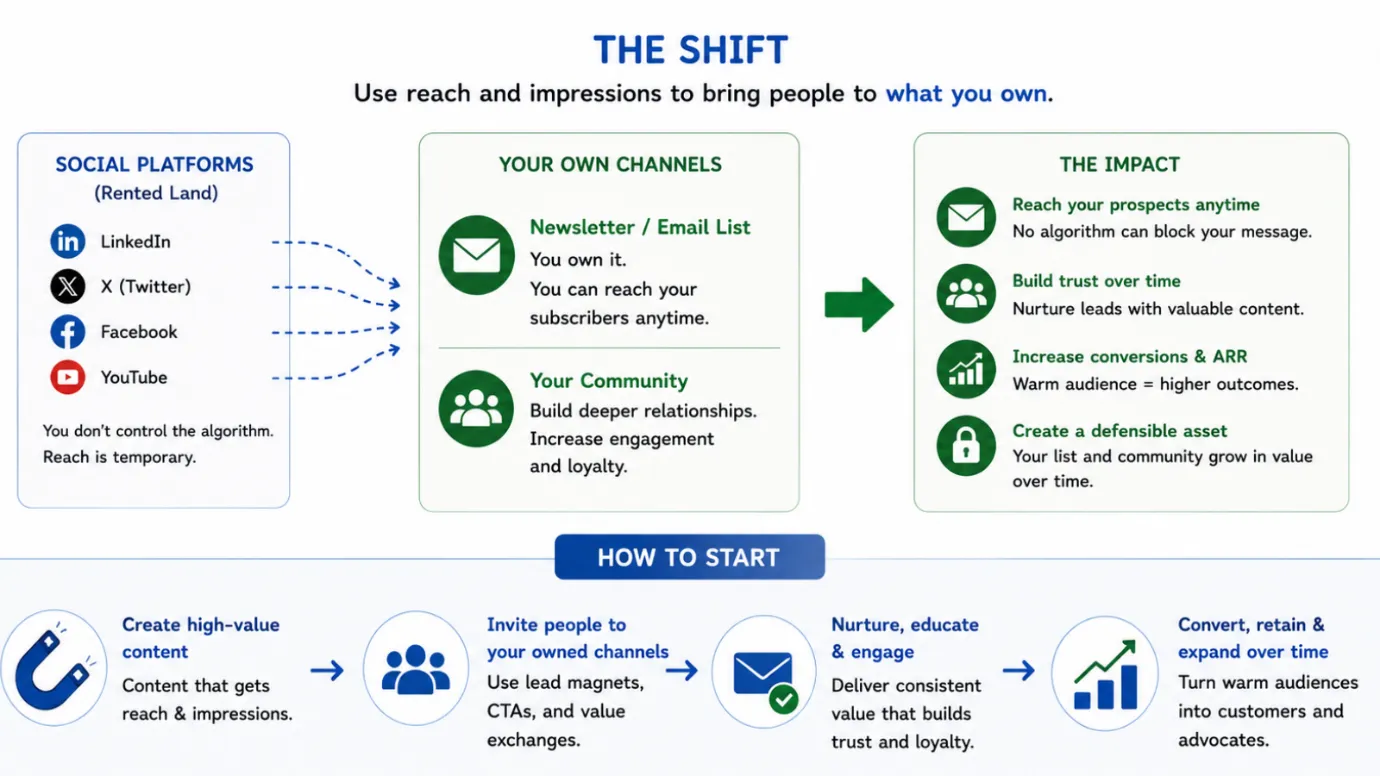
Social media platforms are the “Rented” land. It’s algorithm changes constantly and the organic reach often goes down. The last step in SaaS marketing strategy is to move from rented reach to owned audiences. Use reach and impressions to your newsletter or your own community. When you move users from LinkedIn and other sites to an email list you control, you can reach your prospects for a long time, no matter how algorithms change.
Free · Instant · No signupSee what ZuAI generates from your website — right now.
Paste your URL. Watch ZuAI write a month of brand-on captions in seconds. Preview before you create an account.
Wrapping Up
Both reach and Impressions can be used to attract more sales, but how well they work depends on the user’s journey. For a meaningful SaaS marketing, you must mov beyond the vanity of “total views.”
Start by using a strict attribution model that links social activity to website conversion. To avoid ad fatigue, figure out your frequency ceiling. Most importantly, make the switch from rented platform reach to owned community audiences your top priority. Using the SaaS Growth Matrix will turn your marketing from a bunch of unrelated social media posts into a powerful growth engine. Use ZU AI effectively for more sales and revenue.